
How Haralson Dockets Are Organized
A docket is the court's running list of case activity. In Haralson County, a docket entry may identify the case number, court, filing date, hearing setting, motion, order, service event, bond event, plea, disposition, sentence, appeal entry, or other case action. It helps a reader track progress without reading the full file. A docket can show that a motion was filed or a hearing was set, but the actual document may require portal access, clerk review, a copy fee, or an in-person request.
Haralson County dockets also depend on venue. Superior Court is Georgia's general-jurisdiction trial court for Haralson County and handles felony cases, divorce, title to land, equity, declaratory judgment, habeas, mandamus, quo warranto, prohibition, and broad civil matters. Probate Court handles wills, estate administration, guardianships, conservatorships, vital records, marriage licenses, weapons permits, and local misdemeanor traffic, game and fish, and drug cases. Magistrate Court handles bond hearings, warrant applications, small claims, dispossessory actions, garnishments, bad checks, and other lower-court matters.
- Docket
- Chronological list of filings and events in a case.
- Disposition
- Final result of a case or charge.
- Motion
- Written request asking the court to take action.
- Continuance
- Court-approved postponement of a hearing or deadline.
Find Haralson Court Dockets Online
Haralson County does not have a confirmed county-run all-docket portal in the official research. The statewide online court-record channel is re:SearchGA, but access was blocked during capture and appears to require account access or other portal steps. That means a docket search should be treated as a starting point, not as proof that every Haralson docket entry or document is online.
The practical path is to search online when the portal allows it, then confirm the docket with the right custodian if the result is missing, gated, or incomplete. For a felony, divorce, broad civil, judgment, accusation, indictment, sentence, or appeal docket, start with Superior Court or the Clerk of Superior Court. For probate and certain misdemeanor traffic matters, start with Probate Court. For small claims, warrant applications, bond hearings, dispossessory actions, and garnishments, check Magistrate Court. City citations and ordinance matters should be checked with the municipal court named on the ticket or notice.
- Identify the court named on the notice, citation, warrant, pleading, or order before searching.
- Use re:SearchGA for court case access if the Haralson case is available and the portal permits access.
- Search by exact case number when possible, then try party or defendant name if no number is known.
- Review entries for filing dates, hearing settings, motion activity, orders, disposition, sentence, or appeal status.
- Contact the clerk or court if a document copy, certification, older docket, or nonpublic item is needed.
The Haralson County Superior Court page explains the court's general-jurisdiction role and Tallapoosa Judicial Circuit context.
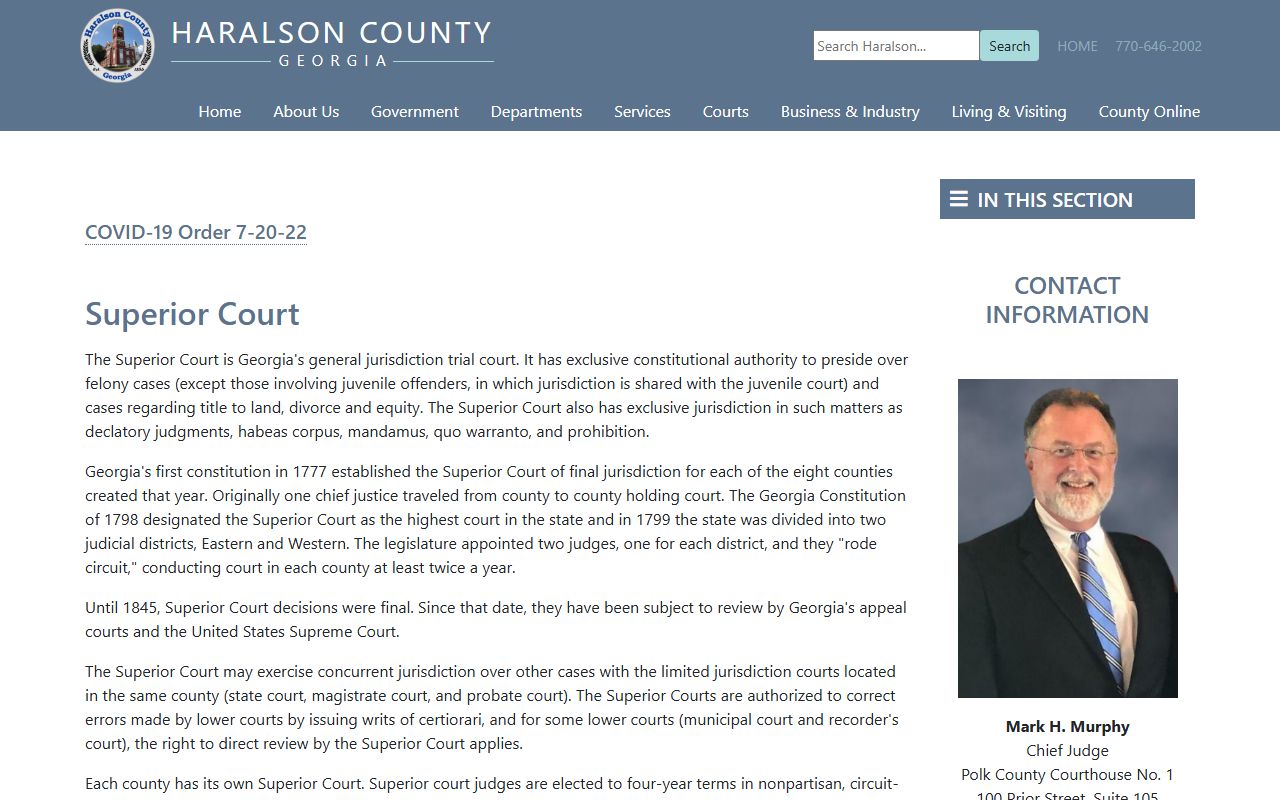
That jurisdiction detail is central to docket routing because many felony, divorce, equity, title-to-land, and major civil docket events belong in Superior Court.
Sample Haralson Docket Fields
No public Haralson County sample docket entry was inspectable from the official sources captured. The field inventory below is drawn from the research file's expected public case-record and docket-entry fields. It should be read as a safe description of what docket records commonly identify when available, not as a promise that every online result includes each field or document link.
| Field | What It Shows |
|---|---|
| Case number | The court's tracking number for the case, filing, citation, warrant matter, or appeal record. |
| Entry date | The date a filing, hearing notice, order, plea, sentence, disposition, or other event was added. |
| Court | The venue, such as Superior, Probate, Magistrate, Juvenile, or a municipal court. |
| Event type | The action recorded, such as filing, service, hearing, motion, order, bond, plea, disposition, sentence, or appeal. |
| Party or attorney | The person, state, petitioner, respondent, defendant, plaintiff, or counsel associated with the entry if public. |
| Judge | The judge shown on a docket, order, hearing notice, or disposition when public. |
| Document status | Whether a related document may exist; download access was not verified for Haralson County. |
| Redaction or restriction | Signals that juvenile, adoption, sealed, mental-health, minor, victim, or personal identifier information may be limited. |
Haralson Courts With Dockets
The research supports several local docket sources, but not one public docket calendar covering all Haralson County courts. Superior Court docket activity is tied to the Clerk of Superior Court for Superior and Juvenile Court filings, criminal warrants, indictments, accusations, sentences, civil and domestic records, and appellate record preparation. Probate Court is a court of record and keeps permanent records except information barred from public inspection. Magistrate Court has its own lower-court docket activity for warrant applications, bond hearings, civil claims, dispossessory cases, and related matters.
- Superior Court: felony, divorce, title to land, equity, major civil, extraordinary writ, certiorari, and appeal-related docket activity.
- Clerk of Superior Court: filed criminal warrants, indictments, accusations, sentences, civil and domestic filings, judgments, and appellate records.
- Probate Court: estate, will, guardianship, conservatorship, vital-record, marriage, permit, and misdemeanor traffic docket items.
- Magistrate Court: bond hearing, warrant application, small claim, bad check, dispossessory, garnishment, and county ordinance entries.
- Municipal courts: Bremen, Buchanan, Tallapoosa, and Waco city cases when the citation or ordinance matter is city-issued.
Georgia court information gives state-level context for how trial and appellate courts fit together.
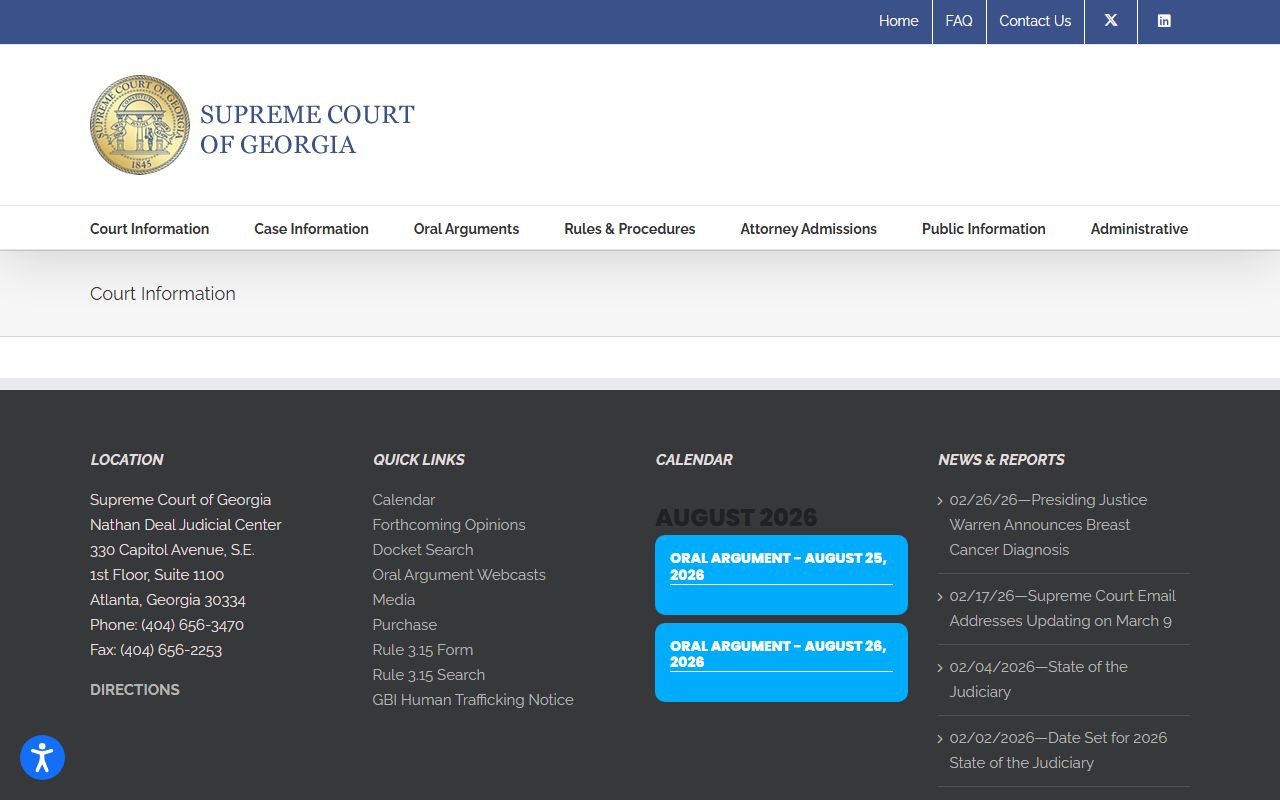
That statewide context matters when a Haralson docket moves from a local trial court record into an appellate record prepared by the clerk.
Dockets vs Haralson Case Files
A docket is not the full case record. It is closer to an index of what happened in the file. A full Haralson County court record may include pleadings, warrants, accusations, indictments, motions, orders, judgments, sentences, probate petitions, guardianship documents, exhibits, service papers, and certified copies. The docket may tell you that an order was entered, but the order itself may require a separate document request.
| Docket | Full Case Record | |
|---|---|---|
| Format | Chronological list of case events. | Documents, filings, orders, notices, and certified copies. |
| Best use | Track status, hearing history, and major case events. | Review the legal filing, order, judgment, sentence, or probate document. |
| Access | May be visible through portal or clerk review when public. | May require portal access, in-person request, fee, redaction, or court approval. |
| Limits | May omit document text and restricted entries. | May include confidential parts that are sealed, redacted, or not available to the public. |
For broad case-file access beyond the docket, the main Haralson County court records path should be used.
Read Haralson Court Dockets
Haralson docket terms follow the type of case. In a criminal case, arraignment means the charges are read and a plea is entered. Bond is security to ensure the defendant returns to court. Disposition is the result of a case or charge. Accusation is a prosecutor-filed charging document, while indictment is a grand-jury charging document. Sentence, probation, bond, and appeal entries show later steps after the charge or plea stage.
Civil and probate dockets use different words. Plaintiff and defendant often appear in civil actions, while petitioner, respondent, fiduciary, ward, estate, and decedent can appear in probate or guardianship records. A motion is a written request for court action. A judgment is the court's final decision or money award. Garnishment, dispossessory, and writ of possession are lower-court civil terms that may appear in Magistrate or Superior Court records.
Note: A docket entry can be public even when the linked document is sealed, redacted, unavailable online, or held by the clerk.
Appeals and Federal Dockets
The Clerk of Superior Court prepares appeal records in civil, domestic, and criminal divisions for the Georgia Court of Appeals and the Supreme Court of Georgia. Superior Court may also correct errors from lower courts by certiorari. When a Haralson County case moves into an appellate path, the local docket and the appellate record may not show the same level of detail in the same place. Local orders and filings should be checked with the clerk, while appellate status should be checked with the Georgia appellate court involved.
Federal dockets are separate. Haralson County federal cases belong to the U.S. District Court for the Northern District of Georgia, not to the county court docket. Federal filings are searched through PACER and the Northern District's CM/ECF access path. Federal bankruptcy records, federal criminal prosecutions, federal civil-rights suits, and federal habeas matters should not be mixed with Haralson Superior, Probate, Magistrate, or municipal dockets.
The Northern District of Georgia CM/ECF entry point is the federal docket system source shown in the manifest.
Federal docket access is useful only when the case is in federal court, not when the matter is a Haralson County trial court file.
Confidential Haralson Docket Entries
Not all docket information is open to the public. Juvenile cases are subject to Georgia juvenile confidentiality rules. Adoption files are restricted under Georgia adoption law. Probate Court matters involving involuntary hospitalization or outpatient evaluation include sensitive health information. Criminal records may be restricted under Georgia's record restriction statute, and personal identifiers such as Social Security numbers, financial account details, minor names, and protected victim information may be redacted.
When a docket appears incomplete, the missing entry may be sealed, restricted, held in a nonpublic section, or not available through the online channel. A clerk can usually explain whether a public copy can be requested, whether a court order is required, or whether the case must be accessed by a party, attorney, agency, or authorized person. For pending criminal matters, the sheriff research specifically points parties and attorneys toward the Clerk of Superior Court and discovery motions rather than a simple open-records request.