
Haralson County Probate Court Records
Haralson County Probate Court has exclusive jurisdiction for probating or proving wills of Haralson County residents. The court also administers estate matters, appoints guardians of minors and incompetent persons, and handles conservatorships. The research lists marriage licenses, birth and death certificates, firearm permits, fireworks permits, explosive permits, certificates of residence, public-officer oaths, public-officer bonds, and involuntary hospitalization or outpatient evaluation matters within the Probate Court's work.
Haralson County has an unusual traffic connection as well. The Probate Court page says the court hears misdemeanor traffic cases, game and fish cases, and drug cases, and collects county and state traffic fines. That does not make every traffic ticket a probate estate file, but it does mean the Probate Court is a public-record contact for more than wills and estates. The court of record status is also important because filed documents must be recorded in minute books and kept permanently available to the public except information prohibited by law from public inspection.
| Probate Court Record Type | What the Research Supports |
|---|---|
| Wills and estates | Probating or proving wills of Haralson County residents and administering estate matters. |
| Guardianships | Temporary and permanent guardians of minors, plus guardians for adults who need protection. |
| Conservatorships | Conservators of minors and adults, with fiduciary records that may include sensitive information. |
| Vital records | Birth, death, and marriage certificates, plus marriage licenses issued through Probate Court. |
| Permits and oaths | Georgia weapons carry permits, fireworks and explosive permits, public-officer oaths, and public-officer bonds. |
| Traffic and related misdemeanors | Misdemeanor traffic citations, game and fish cases, drug cases, and collection of county and state traffic fines. |
Judge J. Edward Hulsey Jr.
Judge J. Edward Hulsey Jr. is listed as Haralson County Probate Judge in the research. The Probate Judge page states that Judge Hulsey graduated from West Georgia College and Cumberland School of Law at Samford University. It also says he has served as Probate Judge for 20 years, works as an adjunct professor of history and government, serves as president of the Constitutional Officers' Association of Georgia, and is known locally as a pianist and organist.
Those biographical facts do not change access rules, but they identify the local judicial officer tied to Haralson County Probate Court records. Probate questions about petitions, hearings, letters, and certified copies should still go through the court office rather than through a biography page. The judge's page is useful for court identity and local context, while the Probate Court page carries the jurisdiction list and contact information.
Haralson Probate Terms Defined
Probate records use terms that can be hard to read without context. The definitions below are plain-language explanations for common words in a will, estate, guardianship, or conservatorship file. The court decides how those terms apply in a specific case, and the clerk or court staff cannot provide legal advice.
- Testator
- A person who made a will.
- Executor
- A person named to carry out the will and handle estate duties after appointment.
- Intestate
- A death without a valid will, which may require a different estate-administration process.
- Guardianship
- A court appointment for care or decision-making for a minor or an adult who needs protection.
- Conservatorship
- A court appointment focused on managing money or property for a protected person.
- Letters
- Court-issued proof that a fiduciary has authority to act for an estate or protected person.
Search Haralson County Probate Records
No official Haralson County online probate search portal was located in the research. The documented access path is direct contact with Probate Court, with in-person copy requests and possible mail requests after the requester confirms the current procedure and fee. Because Probate Court handles several record types, the first step is identifying whether the matter is a will, estate, guardianship, conservatorship, vital record, marriage license, permit, mental-health matter, or traffic citation.
- Identify the Probate Court record type before requesting copies or case information.
- Contact Probate Court at 770-646-2008 for the correct petition, form, copy process, and filing fee.
- File the petition or request with Probate Court when the matter belongs there.
- Attend any required hearing or oath appointment if the court sets one.
- Receive letters, orders, certificates, licenses, or other probate outputs from the court when issued.
- Ask whether any part of the record is confidential before requesting a full file copy.
Haralson County Probate Contact
Haralson County has one Probate Court contact in the research. This contact card is the local starting point for probate records, marriage licenses, vital records handled by the county custodian, guardianship and conservatorship matters, weapons carry permit questions, and county-level traffic matters assigned to Probate Court. The research did not locate public hours, so call before visiting.
Haralson County Probate Court
4485 GA-120
P.O. Box 620
Buchanan, GA 30113
770-646-2008
Fax: 770-646-8827
Hours not located in official sources
Haralson Probate Fee Schedule
The research did not locate an official Haralson County Probate Court fee schedule for estate filings, letters, guardianships, conservatorships, certified copies, marriage records, or other probate records. Fees should be confirmed before filing or requesting copies. This is especially important because probate matters can involve filing fees, copy costs, certification costs, publication costs, bond requirements, and later estate-accounting costs that differ by case type.
| Item | Amount Located | Research Status |
|---|---|---|
| Original probate application | not located in official sources | Confirm with Probate Court. |
| Letters testamentary or administration | not located in official sources | Confirm with Probate Court. |
| Certified probate copy | not located in official sources | Confirm copy cost and certification cost. |
| Guardianship application | not located in official sources | Confirm with Probate Court. |
| Conservatorship application | not located in official sources | Confirm with Probate Court. |
| Marriage license or certificate copy | not located in official sources | Confirm with Probate Court as vital-record custodian. |
What Probate Records Show
Haralson County probate records may show the decedent, ward, petitioner, fiduciary, petition type, letters issued, bond, inventory, annual return, hearings, orders, and restrictions. The exact record depends on the case. A will file may center on proving the will and appointing a representative. An estate-administration file may show petitions, notices, fiduciary authority, inventories, returns, and orders. A guardianship or conservatorship file may contain sensitive information about a minor or adult who needs protection.
The county also uses Probate Court for marriage licenses and vital records. Those are not estate files, but they share the Probate Court custodian path. Probate traffic jurisdiction is also separate from estate administration, even though the same court is named in the official county source. Requesters should name the exact record type to avoid delays.
The county page for the Filing Activity Notification System covers Georgia filing alerts for property-related records, not ordinary probate estate search.
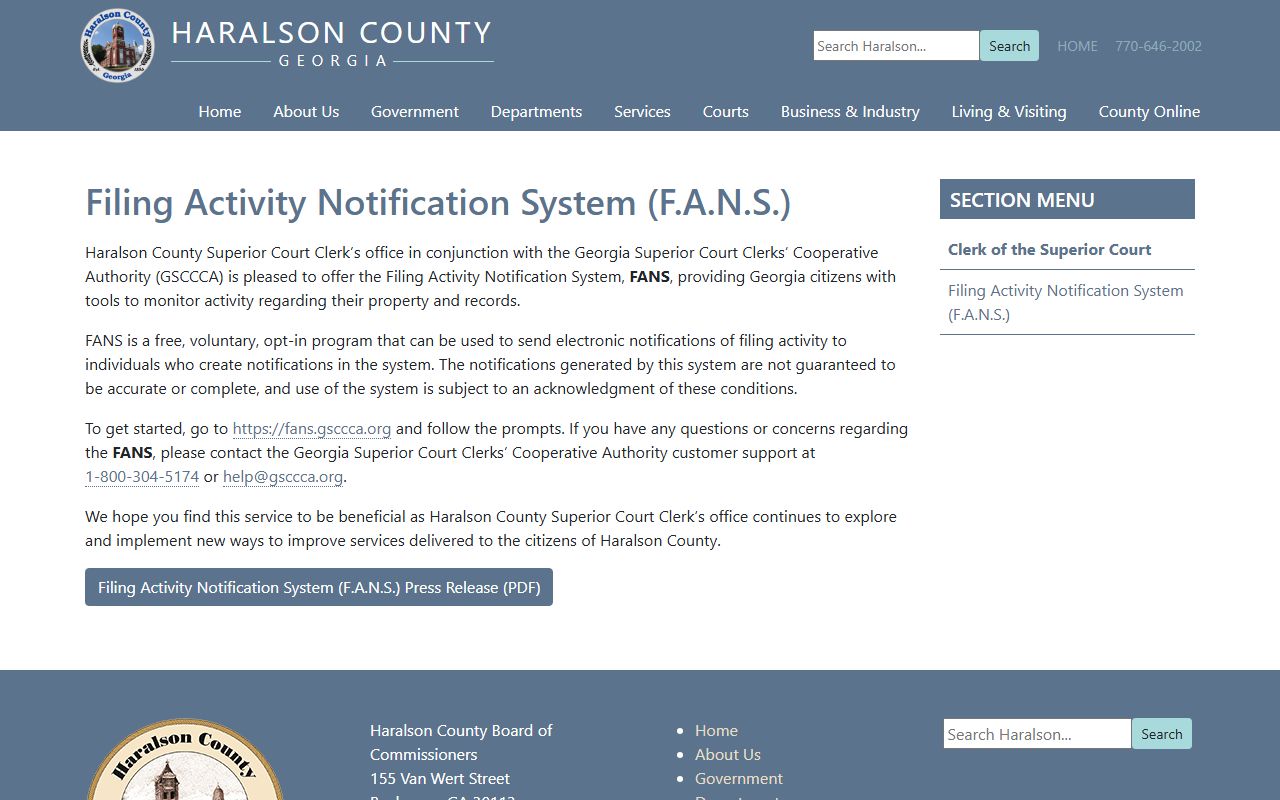
That distinction matters because property-filing alerts are not a substitute for asking Probate Court about an estate or guardianship file.
Public and Restricted Probate Files
Probate Court is a court of record, so documents filed there must be recorded and kept permanently available to the public unless a law prohibits inspection. Public access may cover many wills, estate-administration filings, bonds, letters, and orders. Restricted access may apply to mental-health or involuntary hospitalization matters, minor guardianships, sealed materials, and legally protected information. The court or custodian should confirm what can be viewed or copied before a requester assumes the full file is open.
Public access also depends on the document within the file. A case may have a public docket or order while medical, minor, financial, or sealed attachments remain unavailable for general inspection. Probate Court can confirm whether a requester may inspect the file, obtain plain copies, obtain certified copies, or receive only limited information. That distinction is especially important for guardianship, conservatorship, and involuntary-treatment matters, where the record may involve a protected person rather than a decedent's estate.
| Access Category | Examples From the Research | Practical Handling |
|---|---|---|
| Usually public if not sealed | Wills, estate administration, letters, bonds, public orders, and court-record minute entries. | Ask Probate Court for inspection or copy procedure. |
| Potentially restricted | Minor guardianship, adult guardianship, conservatorship, and protected-person details. | Confirm what portions can be viewed or copied. |
| Sensitive or nonpublic | Involuntary hospitalization and outpatient evaluation materials. | Do not assume public access; contact the court for lawful handling. |
| Different record family | Marriage licenses, vital certificates, and Probate Court traffic citations. | Use Probate Court, but identify the exact record type. |
Georgia's statewide filing-alert system is tied to the Superior Court Clerks' Cooperative Authority, not to unrestricted probate-file access. The GSCCCA Filing Activity Notification System is useful for monitoring filing activity in certain clerk records.
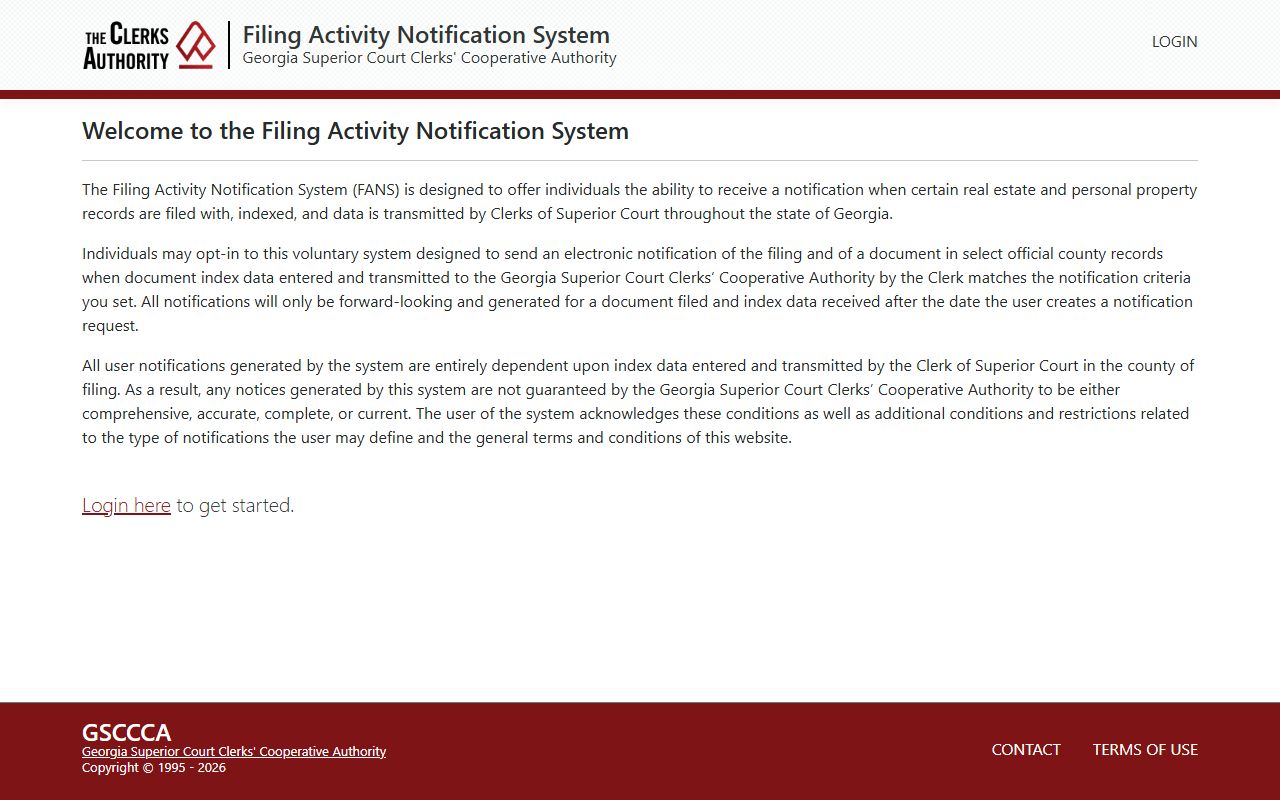
Filing alerts may help monitor property-related filings, while Probate Court remains the direct source for probate copies and access limits.
Haralson Probate Research Gaps
The official captured sources did not locate a small-estate threshold, will-safekeeping deposit rule, public probate forms page, publication details, hearing timelines, or full fee schedule for Haralson County Probate Court. Those gaps should be handled by direct court contact. For copy requests, provide the decedent or ward name, approximate date, record type, case number if known, and the type of copy needed. For filings, ask the court which petition or form applies before mailing payment or documents.
Note: Probate Court staff may explain office procedure, but legal advice about estates, heirs, guardianships, or fiduciary duties should come from qualified counsel.